A little history on the luminaria
Several variations of the luminaria exist, but the one people are most familiar with is the one that contains a light source – usually a candle – inside a plain or decorated small paper bag. You probably know what luminarias look like, but did you know that not all the United States calls them by the same name?
Definition: a luminary is defined as a person who inspires or influences others; it follows that luminaries are several of those individuals. Luminaria, on the other hand, is a traditional Mexican Christmas lantern originally consisting of a candle set in sand inside a paper bag.
In parts of New Mexico, for instance, they’re generally referred to as farolitos. This name is common in Santa Fe and other northern areas of the state. Farolito means “little lantern” in Spanish, and luminaria, means “festival light.” Traditionally, the term luminaria was used in reference to a vigil bonfire, though it’s primarily northern New Mexicans who have kept this distinction. But whether you call it a farolito or a luminaria, it’s beautiful to look at and easy to make. Just about everybody loves making a luminary, especially during the Christmas season. People were celebrating with luminarias long before luminaria kits were invented, however.
The original way these lights were made is like how they’re made today; people would put sand in the bottom of a sack and insert a candle into the sand, which held the candle in place. Early on, when used in Christmas celebrations, the Roman Catholic Church believed the lights would guide the spirit of the Christ child to people’s homes.
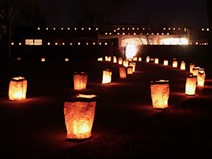
These days luminarias are thought of more in the way people think of Christmas lights – something pretty and decorative to look at. Santa Fe and Albuquerque, New Mexico, as well as other parts of the state are well-known for their elaborate holiday lighting displays, which almost always include farolitos. Neighborhoods in some smaller towns feature blocks-long displays in front of people’s homes of Christmas figures like Santa, reindeer, sleighs, snowmen, and the like. In West Valley, Utah, the luminaria is also popular. More than 300 of them are used to light the path on the first Monday in December during the annual Walk with Santa event. The American Cancer Society’s Relay for Life events will often have luminarias placed around the walking track. As you can see, luminarias are popular in many places and are used in many ways.
History of Luminarias or Farolitos
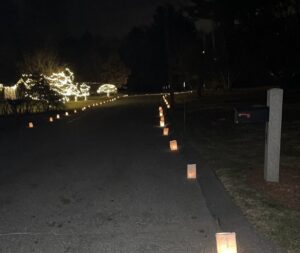
Image – Wendy Ciaccia © 2021, all rights reserved
One of my favorite sights at Christmas are the illuminated paper bags that line walkways and sometimes the tops of houses. I wondered how this tradition began and thought you might be interested too.
Pinning down the actual start proved harder than I thought. There are many different ideas about luminarias, including what to call them. I’ve read many accounts and will share the most common with you, but I would love to hear your thoughts below if they differ from what I’ve learned.
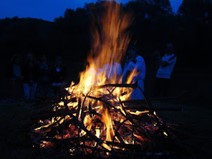 Luminarias first began as bonfires lighting a path. The story is told that these fires were lit at so Mary and Joseph and the Christ child would find their way to a welcoming place. Some believe a type of luminaria lit the way in Bethlehem. People lit luminarias to show that Christ was welcome in their house.
One of the first mentions in North America of the lights comes from a journal of Spanish explorer, de Sosa, when he was in what would become New Mexico. He mentioned the lighting of fires along the trail to guide soldiers to the camp. He referred to the fires as luminarias, establishing that as a name for the guiding lights.
Small campfires were used as luminarias until the 18thcentury when Chinese lanterns were introduced to North America. The lanterns were not as convenient to use since they were fragile and costly. When paper bags were invented in 1872 and brought west on the Santa Fe trail, people discovered they could put sand in the bottom of the bag and insert a small candle in the sand. This option was much cheaper than the lanterns and became the popular tradition that continues today.
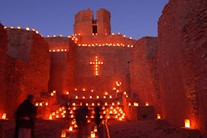 Over the years, in New Mexico, there has been great controversy over what to call the holiday lights. The term luminaria means light. But in Northern New Mexico they prefer to call the lighted bags, farolitos, which means little lantern. The issue about which is correct is a long debate. In the end, they are both beautiful, and have such a similar meaning, that I don’t understand the conflict.
Luminarias are used in many communities across the United States and in other countries. Each community has their own emphasis on why they carry out the tradition. Not all are for Christmas either. Some are to light the way to church. Some light the way for the Christ child. Some light the way for Papa Noel, or Santa Claus.
No matter the reason the flickering lights inside the paper bags are beautiful along a walkway or road. They are a sign of caring and hope. I do love this tradition.
What about you? Do you use luminarias or farolitos? Do you have a different understanding of the tradition? I would love to hear from you and learn more about this fascinating custom. more…
– Nancy J. Farrier
Luminaria – Pictures